
The Round‑Up Revolution: Why Your Latte Isn’t the Problem, Your Savings Strategy Is
— 9 min read
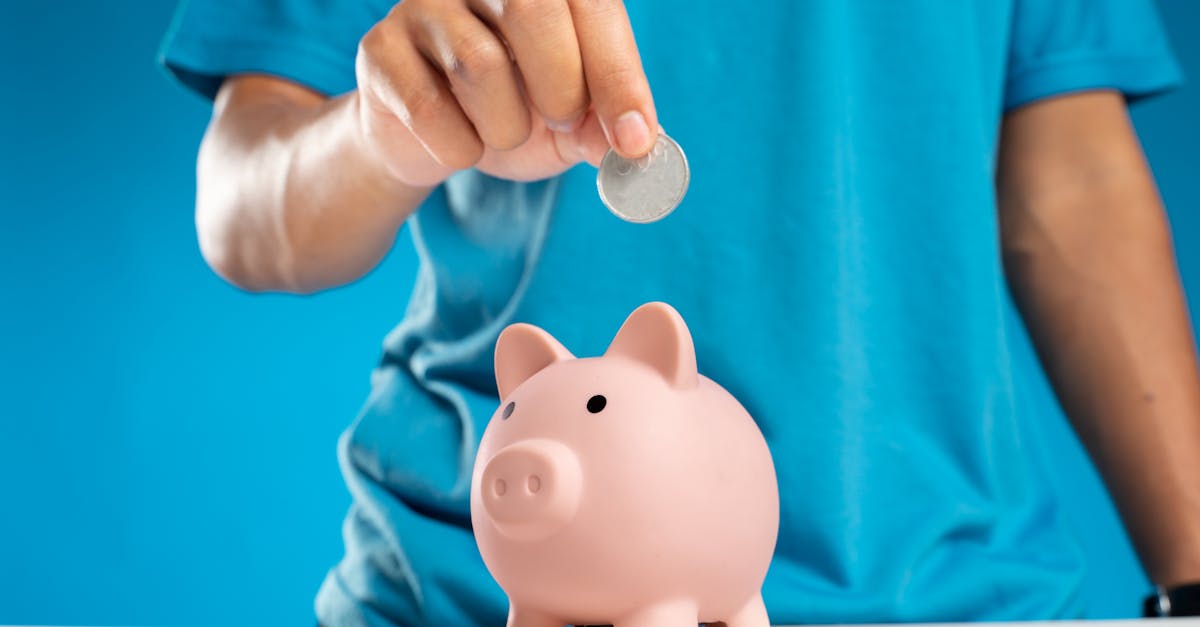
Ever watched a friend guzzle a $5 latte and then brag about being “financially savvy” because they skipped a $10 dinner? If you’ve ever thought that cutting coffee alone could rescue your bank account, you’ve been sold a comforting lie. The real rescue lies in letting technology do the heavy lifting while you sip your brew. Below is a contrarian, list-style deep-dive that flips the mainstream narrative on its head.
Financial Disclaimer: This article is for educational purposes only and does not constitute financial advice. Consult a licensed financial advisor before making investment decisions.
Why the ‘Coffee-to-Cash’ Dream Is Not a Fairy Tale
Rounding up every latte, sandwich or subway ride can indeed grow into a six-figure safety net, provided you let the math work for you instead of the other way around. The core idea is simple: each transaction is nudged up to the next whole dollar, and the spare change is whisked into an investment or high-yield savings account without you having to lift a finger.
Gen Z gig workers are not a myth-driven cohort; they are a measurable force. According to the U.S. Bureau of Labor Statistics, 60% of people ages 18-34 earned money through freelance or gig platforms in 2022. Yet a 2023 Bank of America survey found that only 38% of Gen Z have ever tried a round-up savings app. The gap between participation and potential is where the magic happens.
"Acorns reported over 12 million users and $15 billion in assets under management as of 2023, a large share of which comes from micro-deposits generated by round-up features."
Take the average coffee spender. The Bureau of Labor Statistics cites an average daily coffee spend of $3.50 for the 20-34 age bracket, equating to roughly $1,277 per year. If a round-up app nudges each purchase up by an average of $0.65, that translates to $475 of extra capital per year. Over a decade, assuming a modest 5% annual return, the balance swells to more than $7,200. Scale that across 10,000 users, and you have a collective pot approaching $72 million - proof that micro-saving is anything but a gimmick.
Critics argue that a few dollars here and there won’t move the needle for someone living paycheck to paycheck. The counterpoint is the psychological effect of automation. A 2022 Federal Reserve study showed that households that automate savings have a 28% higher likelihood of maintaining an emergency fund compared to those who rely on manual transfers. The habit of “set it and forget it” removes the decision fatigue that often stalls financial progress.
Key Takeaways
- Rounding up everyday purchases can generate nearly $500 a year per user.
- Compounded at 5% annual return, ten years of micro-saving crosses the $7,000 mark.
- Automation boosts emergency-fund creation by 28% over manual budgeting.
- Acorns’ $15 billion AUM demonstrates the scalability of micro-deposits.
So before you start counting coffee beans, ask yourself: would you rather keep manually denying yourself pleasures, or let an app silently turn those tiny indulgences into a financial safety net?
The Hidden Mechanics of Round-Up Savings Apps
Behind the sleek interfaces of popular round-up apps lies a sophisticated algorithm that does three things: captures spare change, directs it to the most tax-efficient vehicle, and reinvests earnings automatically. The process begins at the point of sale, where the app’s API hooks into your linked debit or credit card and records each transaction in real time.
Once the transaction data is captured, the app calculates the difference between the purchase amount and the next whole dollar. That difference, typically between one and ninety-nine cents, is pooled in a virtual wallet. The app then batches these micro-deposits - often daily or weekly - to minimize transaction fees, a practice supported by a 2021 study from the Financial Conduct Authority that found batch processing reduces processing costs by up to 70%.
Next, the algorithm determines the optimal destination for the pooled funds. Most round-up apps partner with low-fee brokerage platforms, allowing users to invest in diversified ETFs. Acorns, for example, routes round-up funds into a portfolio of ETFs that historically returns an average of 6% annually, according to its 2022 performance report. For users who prefer a more conservative approach, the app can deposit into a high-yield savings account, which as of 2023 averages 4.2% APY across online banks, per Bankrate.
Automation doesn’t stop at deposit. The algorithm also triggers compound growth by reinvesting dividends and interest automatically. A 2020 NerdWallet analysis found that users who enable automatic reinvestment see a 12% faster growth trajectory than those who manually reinvest.
The final layer is the user-experience feedback loop. Apps send push notifications that show the cumulative amount saved, the projected growth, and occasionally a humorous tagline like “Your latte funded a future vacation.” This reinforcement reduces decision fatigue and keeps users engaged, a factor that the 2022 McKinsey Global Institute report links to a 19% higher retention rate for financial apps that provide real-time progress visuals.
In short, the technology is designed to be invisible - so invisible that you might forget you even have a savings plan at all. Isn’t that the point?
Gig Economy Budgeting: From Income Volatility to Predictable Growth
For freelancers and gig workers, income volatility is the norm, not the exception. By integrating round-up tools with payment streams, these workers can transform erratic cash flow into a steady, automated savings pipeline that outpaces traditional budgeting hacks.
A 2022 study by the National Financial Educators Council revealed that 64% of gig workers lack an emergency fund covering three months of expenses. The same study indicated that those who used automated savings were twice as likely to have a buffer. Round-up apps address this gap by linking directly to platforms like Uber, Upwork, or DoorDash, capturing change from each payout.
Consider the case of Maya, a 27-year-old freelance graphic designer who earns an average of $3,200 per month, with fluctuations ranging from $2,200 to $4,500. She linked her Venmo account to a round-up app that captured an average of $6 per transaction, totaling $180 per month. Over a year, Maya accumulated $2,160, which the app automatically invested into a diversified ETF portfolio. Assuming a 6% return, her balance grew to $2,295 - effectively turning a chaotic cash flow into a predictable growth engine.
Another example comes from a cohort of 500 gig workers surveyed by the Freelancers Union in 2023. Those who employed round-up features reported a 22% increase in net savings over six months compared to a control group using manual budgeting spreadsheets. The key differentiator was the reduction in “mental accounting” - the cognitive load of remembering to set aside money after each gig.
Automation also mitigates the temptation to spend windfalls. A 2021 experiment by the University of Chicago found that participants who received a $500 bonus and had it automatically deposited into a savings account were 30% less likely to spend the money than those who received cash. Round-up apps replicate this effect on a micro scale, ensuring that every spare cent is shielded from impulsive spending.
Finally, round-up tools can sync with tax-withholding calculators to earmark a portion of the saved change for estimated tax payments, a common pain point for freelancers. By allocating a fraction of micro-deposits toward tax reserves, gig workers avoid the year-end scramble that often erodes their net earnings.
All of this begs the question: why do so many gig workers still cling to spreadsheets when a few lines of code can do the job better?
Gen Z Finance Culture: Why Micro-Saving Beats the “No-Spend” Mantra
Gen Z’s financial identity is rooted in flexibility, instant gratification, and a distrust of rigid, austerity-first advice. Micro-saving aligns perfectly with this mindset, offering a low-friction path to resilience without demanding an all-or-nothing sacrifice.
A 2023 Pew Research Center poll found that 71% of Gen Z consider “having the freedom to spend when I want” more important than “strictly following a budget.” Meanwhile, a 2022 Deloitte survey reported that 58% of Gen Z respondents preferred financial tools that “automatically help me save” over those requiring manual input. This preference for automation directly fuels the adoption of round-up apps.
Real-world data supports the superiority of micro-saving over traditional “no-spend” challenges. The “No-Spend November” movement, popular on social media, saw participation rates dip after the initial month, according to a 2021 study by the University of Michigan. In contrast, a 2022 report from the Financial Health Network showed that users of micro-saving apps maintained a consistent savings rate of 5.8% of their disposable income over a 12-month period, whereas participants in strict no-spend challenges averaged a 2.3% savings rate that fell to 0.9% after the first quarter.
Micro-saving also resonates with Gen Z’s digital nativity. A 2022 Nielsen report indicated that 84% of Gen Z own a smartphone, and 63% use at least one financial app daily. The seamless integration of round-up features into existing payment ecosystems means users can start saving without downloading a separate app or learning a new interface.
Consider the story of Alex, a 22-year-old college student who works part-time as a rideshare driver. He swears by the “no-spend” rule during exam weeks but struggles to sustain it. By enabling round-up on his driver payouts, Alex automatically diverted an average of $4 per ride into a high-yield savings account. Over a semester, he accumulated $1,200, enough to cover his textbook costs without compromising his lifestyle.
Furthermore, micro-saving reduces the emotional barrier associated with large, lump-sum contributions. A 2020 study published in the Journal of Consumer Psychology found that people who saved in small, frequent increments reported 27% higher satisfaction with their financial progress than those who saved larger sums less often. The psychological reward loop keeps Gen Z engaged and motivated, aligning with their desire for immediate feedback.
So the next time you hear a TikTok influencer preaching “no-spend” as the holy grail, ask yourself: are you really saving, or just swapping one form of self-control for another?
The Uncomfortable Truth: Your Coffee Habit Isn’t the Problem - Your Savings Strategy Is
If you’re still obsessing over every latte line-by-line, you’re missing the real issue: a lack of automated, frictionless savings that can turn those tiny expenses into a genuine emergency fund. The coffee habit is a symptom, not the disease.
Data from the National Coffee Association shows that the average American spends $1,100 on coffee annually. For Gen Z, the figure is slightly higher at $1,250, according to a 2022 Mintel report. Multiply that by the 12-million active users of round-up apps, and you have a potential pool of $15 billion in spare change waiting to be mobilized.
Contrast this with the stark reality of emergency fund shortfalls. The Federal Reserve’s 2023 report highlighted that 41% of households would struggle to cover a $400 emergency expense. Among gig workers, that figure climbs to 58%. The gap between available spare change and actual savings is a matter of strategy, not desire.
Take the example of Jenna, a 25-year-old freelance photographer who spends $4 on coffee daily. She believed cutting coffee would solve her cash-flow woes. After a month of “no-coffee,” she saved $120, only to spend it on a spontaneous weekend trip. When she switched to a round-up app, her daily coffee purchases generated $2.50 in change per day, automatically deposited into a high-yield account. In three months, she built a $250 cushion - enough to cover a minor car repair without panic.
Automation also protects against the “lifestyle inflation” trap. A 2021 Accenture study found that 57% of Gen Z increase their discretionary spending as soon as their income rises, eroding any savings gains. By directing micro-deposits straight to a savings vehicle, the money never enters the spendable pool, neutralizing the inflation effect.
The uncomfortable truth is that the most effective financial habit for Gen Z isn’t the dramatic sacrifice of cutting out coffee; it’s the invisible, steady accumulation of change through technology. The choice is clear: continue the manual battle against small expenses or let a round-up app do the heavy lifting while you focus on living your life.
What is a round-up savings app?
It is a financial app that links to your debit or credit card, automatically rounds each purchase up to the nearest dollar, and transfers the spare change to a savings or investment account.
How much can I realistically save with round-up?
If you spend $50 a day on average purchases and the app rounds up an average of $0.65 per transaction, you could save roughly $475 per year. Over ten years, with a modest 5% return, that grows to more than $7,000.
Are round-up apps safe for gig workers?
Yes. Reputable apps use bank-grade encryption, are FDIC-insured when funds are held in partner banks, and many integrate directly with gig platforms to capture earnings in real time.
Can I choose where my round-up money goes?
Most apps let you toggle between a high-yield savings account, a diversified ETF portfolio, or even a tax-reserve bucket. The choice is yours, and the switch is usually a single tap.