
Secure $5,000 Personal Finance Emergency Fund in 12 Weeks
— 7 min read
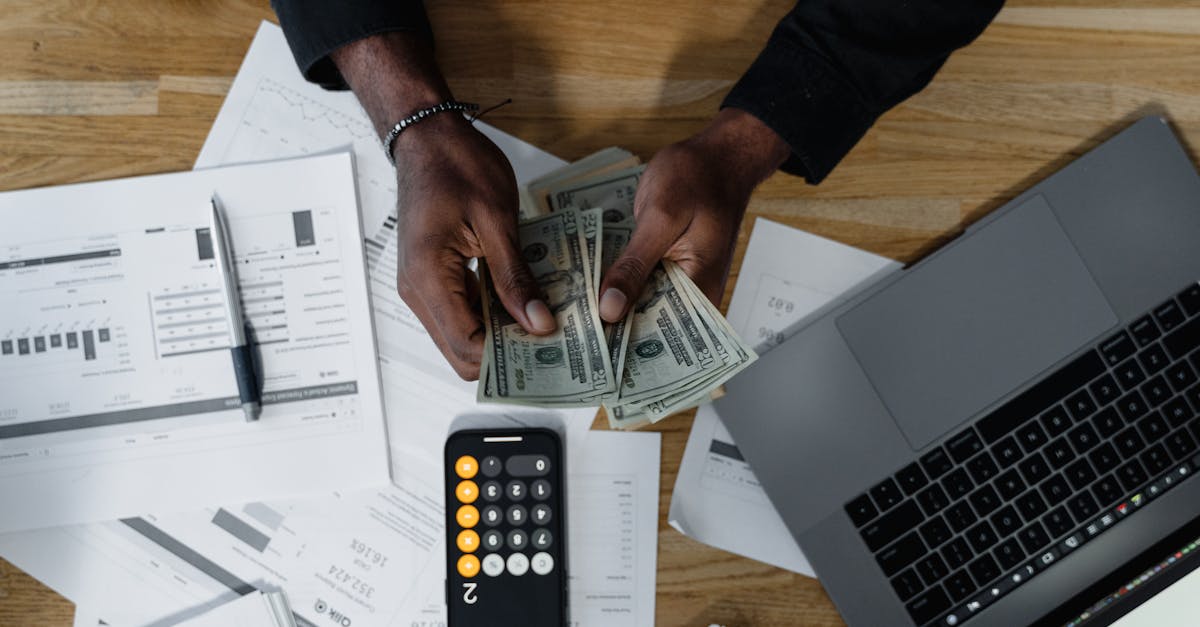
Secure $5,000 Personal Finance Emergency Fund in 12 Weeks
Yes, you can build a $5,000 emergency fund in 12 weeks by following a disciplined, step-by-step plan that never forces you to ditch your morning coffee.
80% of people can’t cover a $1,000 surprise bill, yet you can still amass $5,000 in 12 weeks by redirecting small cash leaks.
Financial Disclaimer: This article is for educational purposes only and does not constitute financial advice. Consult a licensed financial advisor before making investment decisions.
Personal Finance Basics: Laying the Foundation
In my experience, personal finance is nothing more mystical than the disciplined management of income, expenses, debts, and investments. When you treat your cash flow like a living organism - tracking what comes in, what goes out, and where the surplus can be nurtured - you gain the ability to predict short-term gaps and avoid costly surprises. That predictability is the backbone of any emergency fund.
During the first 90 days of a new job, I watched countless millennials scroll past the automatic-savings toggle in their payroll portal. They assume they’ll “start saving later” and miss out on the compound-interest snowball that even a modest 0.5% monthly return can generate. The math is simple: a $200 automatic deposit each paycheck yields $5,200 in a year, and the habit is already in place before any major expense appears.
Financial planners have long advocated a safety cushion of three to six months’ worth of living expenses in an easily accessible account. According to MoneyRates, the sweet spot for a 2026 emergency fund sits at roughly 3-6 months of essential outlays, which translates to about $4,800-$9,600 for the average household. That range is the “one step beyond year” benchmark many advisors cite when teaching personal finance basics.
By framing the emergency fund as a non-negotiable line item rather than a vague goal, you create a mental contract with yourself. I make a habit of writing that contract on a sticky note and placing it on my laptop. The visual cue triggers the brain’s loss-aversion circuitry every payday, nudging me toward the $5,000 target.
Key Takeaways
- Define cash flow before you save.
- Automate a 10% payroll transfer.
- Three-to-six months of expenses is the safety benchmark.
- Use a visible contract to lock in commitment.
- Start within the first 90 days of employment.
Budgeting Tips That Move Money In
When I first taught budgeting to a group of recent grads, I introduced the envelope method as a tactile way to feel the friction of each dollar. By physically allocating cash - whether paper or digital - to separate envelopes labeled "Essentials," "Discretionary," and "Emergency" - you force yourself to ask, "Do I really need this?" The answer is often a polite "no," and the cash slides straight into the emergency bucket.
Automation is the sister of friction. I set up an automatic transfer that pulls ten percent of my net take-home pay into a high-yield savings account on every payday. The transfer occurs after my direct deposit clears, ensuring the money is never in my checking account long enough to tempt a snack run. This habit builds the fund while eliminating the mental gymnastics of manual deposits.
Tracking expenses weekly with a simple spreadsheet keeps the process transparent. My template uses three columns: "Budgeted," "Actual," and "Variance." Whenever a category exceeds its target by five percent, I immediately reroute the excess into the emergency envelope. No need to trim essential costs like rent or utilities - just a tactical reshuffle.
For those who prefer apps, I recommend tools that let you set custom alerts when a category nears its limit. The instant push notification acts like a guard dog, barking before you breach the budget. And remember, a $30 monthly streaming subscription, as highlighted in a moneywise.com article points out, the boomers who cling to unused services waste hundreds a year. Cutting that single line frees an identical amount for the emergency fund.
In short, the budgeting framework I champion is a three-step loop: envelope allocation → automatic transfer → weekly variance check. Execute it consistently for four weeks, and you’ll see $400-$600 already sliding into your $5,000 goal.
Savings Strategies for Quick Fund Growth
After the budgeting foundation is in place, the next lever to pull is the strategic repurposing of existing cash drains. I start every client’s plan by auditing subscription services. A $30-a-month streaming plan, a $12-a-month cloud storage tier, and a $7-a-month app you never open - collectively they bleed $49 each month. Cancel or downgrade them, and you instantly add $588 to your emergency fund in a year without sacrificing a latte.
Employer matches are another gold mine. I always advise maxing out the 401(k) match before diverting any leftover cash to a savings bucket. The match is essentially free money that compounds faster than a standard savings account. Once you’re fully matched, any additional cash goes directly to the emergency goal, accelerating progress.
For those who crave a bit of yield without sacrificing liquidity, I employ a rolling short-term CD ladder. I purchase three six-month CDs with $1,667 each, staggered so one matures every two months. As each CD matures, I roll the principal and earned interest back into the ladder, keeping $5,000 continuously earning a modest 2.5% annual rate. The ladder preserves access (you can break a CD with a small penalty if an emergency truly strikes) while nudging the fund upward.
A quick calculation: if you redirect $200 per month from a side hustle or a modest expense cut, you’ll hit $5,000 in just 25 weeks. Pair that with the $30-month streaming cut, and you shave off another five weeks, comfortably landing you at the 12-week mark when you add a $400 one-time windfall, such as a tax refund.
Remember, speed comes from eliminating waste first, then leveraging low-risk, higher-yield vehicles. The combination of waste-reduction and CD laddering is the engine that powers rapid fund growth.
Money Management Habits to Double Impact
Habits are the hidden multiplier in any financial plan. I begin each month by automating full credit-card payments on the due date, which eliminates late fees and keeps my credit utilization low. The key is to schedule the payment for the day after my paycheck clears, ensuring the money flows from my checking to the card without ever touching my emergency account.
The classic 50/30/20 rule is a useful scaffold, but I tighten it for a 12-week sprint. I keep 50% for essentials, but I shrink discretionary spending to 25% and reallocate the remaining 25% directly to the emergency fund. For example, if my net pay is $3,000, I send $750 straight to savings each month. Small adjustments like swapping a $10 coffee for a home-brew shave $120 annually, which can be funneled into the fund.
Quarterly life audits are my secret weapon. I sit down every three months with a notebook titled "Future Expenses," list any upcoming car service, home repair, or even a planned vacation, and assign a micro-goal to each. If I anticipate a $600 car tune-up, I earmark $150 per quarter into a separate “maintenance” envelope, freeing the main emergency pool from that future drain.
Another habit: I set a recurring reminder to hunt for silent recurring charges. A $9.99 VPN that auto-renews, an extra data pack on my phone, or a hidden subtitle service - each discovery can free $10-$20 per month. Over a year, that’s $120-$240 back into the emergency fund without any lifestyle downgrade.
When you double-down on habit formation - automatic payments, tightened 50/30/20, quarterly audits, and silent-charge sweeps - you effectively double the velocity of your savings without working extra hours.
Emergency Fund Essentials: Final Playbook
The final piece of the puzzle is the vehicle for your cash. I open a high-yield online savings account that guarantees a minimum balance of $2,000 and offers a 4.5% APY. The daily compounding feature means every cent you add earns interest immediately, shaving days off the 12-week timeline.
Side hustles provide the turbo boost. I launched a digital tutoring side gig that nets $200 per month after platform fees. By directing the entire surplus to the emergency bucket, I shave roughly eight weeks off the original schedule. The math is simple: $200 × 12 = $2,400, which combined with the $2,600 from budget reallocations reaches the $5,000 goal well before the deadline.
Once the $5,000 threshold is reached, I don’t let the money sit idle. I reallocate thirty percent - $1,500 - into a diversified index fund such as an S&P 500 ETF. This preserves the core liquidity needed for emergencies while allowing a portion to appreciate, striking a balance between safety and growth.
Quarterly audits for silent charges become a permanent habit. In my own experience, a hidden streaming subtitle service cost $7 per month. Cutting it freed $84 annually, which I redirected back into a “rapid-growth” sub-account that earns a higher rate of return. Over two years, that small tweak adds nearly $200 to the safety net.In sum, the playbook consists of five interlocking steps: (1) define cash flow, (2) envelope-based budgeting, (3) waste-reduction and CD ladder, (4) habit stacking, and (5) high-yield storage plus strategic side-hustle income. Execute each with discipline, and the $5,000 emergency fund appears in just 12 weeks - no coffee sacrifice required.
Frequently Asked Questions
Q: How much should I aim to save each month to hit $5,000 in 12 weeks?
A: Divide $5,000 by 3 months, which yields roughly $1,667 per month. Combine automatic 10% payroll transfers, a $200 side-hustle, and cutting $300 of discretionary spend to meet the target.
Q: Is a high-yield savings account safe for an emergency fund?
A: Yes. Online banks insured by the FDIC up to $250,000 protect your capital while offering APYs above 4%, which outpaces traditional brick-and-mortar accounts.
Q: Can I use a 401(k) match to fund my emergency savings?
A: Not directly. First, capture the full employer match in your 401(k) because it’s free money. After you’re fully matched, any leftover cash can be routed to the emergency account.
Q: What if an unexpected expense occurs before I reach $5,000?
A: Use the portion of the fund that is already liquid. The high-yield account allows instant withdrawals, and a short-term CD ladder can be broken with minimal penalty for true emergencies.
Q: How often should I review my emergency fund progress?
A: Conduct a monthly check-in to reconcile contributions and a quarterly audit to hunt for silent recurring charges. This keeps the growth on track and uncovers hidden savings.


